



WFI & PW Loop TOC Excursions: Trace Root Causes Before Batch Holds
A TOC excursion in a WFI or purified water loop can stop a production discussion almost immediately. One abnormal result appears, and QA, QC, utilities, validation, and production all need a defensible answer: is the pharmaceutical water system still under control, or should the batch remain on hold?
For pharmaceutical manufacturers and CDMOs, pharmaceutical water supports equipment rinsing, cleaning verification, formulation support, utility supply, and GMP release decisions. When total organic carbon moves away from its normal trend, the issue becomes a root-cause investigation, not just a test value. NeuronBC TA Series TOC analyzers help teams review where the excursion appeared, whether it repeated, and how it relates to recent plant activity.

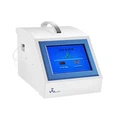
NeuronBC TOC analyzer for pharmaceutical water system monitoring.webp
Why TOC Excursions Matter in Pharmaceutical Water Systems
A TOC excursion can delay batch decisions
In WFI and purified water systems, TOC is used as an indicator of organic contamination. USP <643> provides the testing framework for TOC in pharmaceutical waters, while each facility usually builds internal alert and action levels around validated water-system behavior.
A single TOC excursion does not always mean the loop has failed. It may come from a contaminated sample point, residue after maintenance, a temporary flushing issue, or a real change in the system. When a result is linked to a batch record, cleaning step, or production water use point, the investigation must move fast and stand up to QA review.
OOS is not the only concern
Out-of-specification results get the most attention, but early trend changes can be just as important. A purified water return point may show a mild TOC rise after weekend sanitization, while upstream points stay stable. That does not prove a full-loop failure, but it does require a focused review of time, location, flushing records, and repeat results.
Good Wi-Fi monitoring is not only about catching a confirmed failure. It is about seeing weak signals early enough to control batch-hold risk.
Common Root Causes Behind WFI and PW Loop TOC Excursions
Sampling-point contamination
Not every TOC excursion begins in the main water loop. In daily plant work, the source is often close to the sample point.
Common causes include:
Insufficient flushing before sampling
Contaminated bottles or caps
Residue in a sample valve
Stagnant water in short branches
Poor manual sampling technique
Recent maintenance near the use point
These cases can be frustrating because the loop may be acceptable while the sample result looks abnormal. A TOC analyzer with repeatable performance and clear records helps the team compare follow-up results and decide whether the issue is local or system-wide.
Residue after maintenance, CIP, or sanitization
TOC changes often appear after planned work. Resin replacement, sanitization, filter changeout, system restart, or cleaning activities may temporarily affect TOC values.
If the excursion appears shortly after an intervention, QA and engineering teams need data that connects the result with actual plant activity. Clear timestamps, historical records, and repeatable measurements can turn a vague suspicion into a documented investigation path.
Loop control issues
Repeated TOC increases at the same point may suggest a deeper water-system issue. Dead legs, low-flow areas, aging seals, poor drainage, or early biofilm development can create patterns that appear slowly. A grab sample gives a snapshot. Trend data gives a timeline.
Why One TOC Result Is Not Enough
Trend data shows whether the event is isolated or recurring
A single TOC result tells what happened at one moment. It does not show whether the problem is clearing, growing, repeating, or linked to operations.
A stronger TOC excursion investigation asks practical questions:
Did the excursion occur after maintenance?
Did it affect one point or multiple points?
Did it clear after flushing?
Did conductivity or other water-system signals change?
These questions help QA decide whether a batch hold needs to continue, expand, or move toward closure with documented support.
TOC patterns guide the next investigation step
Different TOC patterns point teams in different directions. The table below gives a practical starting point for GMP water system review.
|
TOC Pattern |
Likely Investigation Direction |
|
Single-point spike |
Sampling valve, flushing practice, local contamination |
|
Multiple-point rise |
Loop control, sanitization, storage, treatment system |
|
Post-maintenance rise |
Residue, incomplete flushing, restart effect |
|
Repeated mild upward trend |
Biofilm risk, dead leg, aging component |
|
TOC rise with conductivity shift |
Broader water chemistry or system-control change |
This type of pattern review keeps the investigation focused and prevents every abnormal result from being treated as the same kind of event.
Multi-point visibility gives better root-cause direction
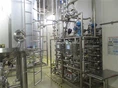
Large WFI and PW loops often include storage, distribution, return, and multiple use points. If TOC rises at a single use point, the investigation may focus on local sampling, flushing, or point-of-use conditions. If several monitored points move together, the site may need to review sanitization, storage, treatment, or broader loop control.
A Practical Workflow for TOC Excursion Review
Confirm the event
Confirm whether the TOC excursion is real, repeated, or isolated. Repeat testing, nearby point review, and comparison with recent historical values can prevent unnecessary escalation.
Compare time and location
Check when and where the excursion appeared. A rise after sanitization may point to residue or flushing. A single-point rise may suggest local contamination. A loop-wide shift may require a broader utilities review.
Link the result to plant activity
Review TOC data alongside maintenance records, sanitization logs, water-use demand, alarms, operator notes, and filter changeout history. In many cases, a small operational detail becomes the key evidence behind the TOC shift.
Document the decision
Audit trail data, exported TOC results, user access records, and trend reports help QA build a cleaner deviation package under GMP expectations and 21 CFR Part 11 data-review practices.
How NEURONBC TA Series Supports TOC Excursion Investigation
MedIntegrity TA-2.0 for QC and at-line TOC testing

NeuronBC ta-2.0 of toc analyzer for pharmaceutical water testing
NeuronBC TA-2.0 supports TC, IC, and TOC testing for water samples in regulated pharmaceutical environments. During a water-system deviation, QC teams need repeatable results, controlled user access, historical records, and a clear review path.
TA-2.0 uses UV oxidation and direct conductivity, with a 1–1500 ppb measuring range, 0.001 mg/L resolution, and a response time of less than four minutes. Its four-level user authority, electronic testing records, history records, and audit trail functions also support GMP documentation.
NEURONBC TA-3.0 for online WFI and PW loop monitoring
NeuronBC TA-3.0 fits online pharmaceutical water monitoring where utilities teams need faster visibility across WFI or purified water loop points. It supports single-point real-time monitoring and multi-point time-division online monitoring.
With a 1–1000 ppb range, 1 ppb resolution, and a response time of about four minutes, TA-3.0 supports daily WFI monitoring and PW loop review. Its real-time display, data upload, and communication with water systems or control systems help connect TOC results with plant activity during deviation review.
Choosing between TA-2.0 and TA-3.0
The choice depends on where the TOC decision is being made.
|
Application Need |
Recommended MedIntegrity Model |
|
Routine QC laboratory TOC testing |
TA-2.0 |
|
At-line confirmation after abnormal TOC results |
TA-2.0 |
|
Online WFI monitoring |
TA-3.0 |
|
Multi-point PW loop monitoring |
TA-3.0 |
|
Deviation review with traceable electronic records |
TA-2.0 or TA-3.0, depending on the workflow |
For many plants, TA-3.0 supports online loop visibility, while TA-2.0 supports QC confirmation and follow-up testing.
Data integrity for GMP deviation closure
A TOC excursion investigation is only useful when the decision can be reviewed later. MedIntegrity TA Series functions such as user management, electronic records, audit trails, history data, and exportable reports help QA teams build a cleaner deviation file.
How NEURONBC Compares in Practical GMP Water Monitoring
Many global TOC platforms are built around broad automation ecosystems, ultra-low detection capability, and complex validation packages. These features can be valuable for large sites with centralized standards and advanced digital infrastructure.
For many pharmaceutical manufacturers and CDMOs, the better buying question is application fit: does the TOC analyzer support the water loop, GMP record review, operator usability, and deviation closure without unnecessary complexity?
NEURONBC is a practical fit for facilities that need clear TOC data, online WFI monitoring options, multi-point PW loop visibility, and traceable records. TA-2.0 supports QC and at-line TOC testing, while TA-3.0 supports online WFI and PW loop monitoring. Together, they help pharmaceutical water teams investigate TOC excursions, review trends, and support documented batch decisions.
Conclusion
A WFI or PW loop TOC excursion does not need to become a long batch-hold event by default. With the right TOC analyzer, pharmaceutical manufacturers and CDMOs can trace when the abnormal value appeared, where it occurred, how it changed, and whether it points to sampling, residue, or broader loop-control concerns.
MedIntegrity TA-2.0 and TA-3.0 support this work with accurate TOC testing, online pharmaceutical water monitoring, multi-point visibility, user control, history records, audit trails, and data export.
Contact NEURONBC to review a WFI or PW loop layout and select the right TA Series TOC analyzer configuration for QC testing, online monitoring, or deviation investigation.
FAQ
Q1: What causes TOC excursions in WFI and purified water loops?
A: Common causes include sampling contamination, maintenance residue, sanitization effects, stagnant sample points, loop control issues, or early organic contamination patterns.
Q2: How does a TOC analyzer help reduce batch-hold risk?
A: It provides trend data, location comparison, and traceable records, helping teams make faster documented decisions.
Q3: How should a facility choose between NEURONBC TA-2.0 and TA-3.0?
A: TA-2.0 suits QC and at-line testing. TA-3.0 suits online WFI and PW loop monitoring.
Q4: When should a facility choose online TOC monitoring?
A: Online monitoring fits critical WFI or PW loops needing faster visibility, trend review, and batch-risk control.
Q5: Why are audit trails important in pharmaceutical water TOC testing?
A: They document who tested, when testing occurred, what changed, and how results were reviewed during GMP deviation closure.