



TOC vs HPLC for Cleaning Validation: Cost and Method Fit
A cleaning validation method affects far more than the laboratory result. It can influence equipment availability, production changeovers, analyst workload, investigation risk, and the cost of maintaining multiple analytical procedures. In 2026, pharmaceutical manufacturers and CDMOs are under growing pressure to obtain reliable residue data without adding unnecessary complexity to routine testing.
TOC and HPLC are both widely used, but they serve different purposes. A TOC analyzer provides a rapid total organic carbon result, while HPLC delivers compound-specific identification and quantitation. The better choice depends on the residue, sampling method, acceptance limit, expected concentration, sample volume, and required level of specificity.
This guide compares TOC and HPLC from a practical B2B perspective, covering method fit, workflow, equipment selection, operating cost, and the information buyers need before requesting a quotation.
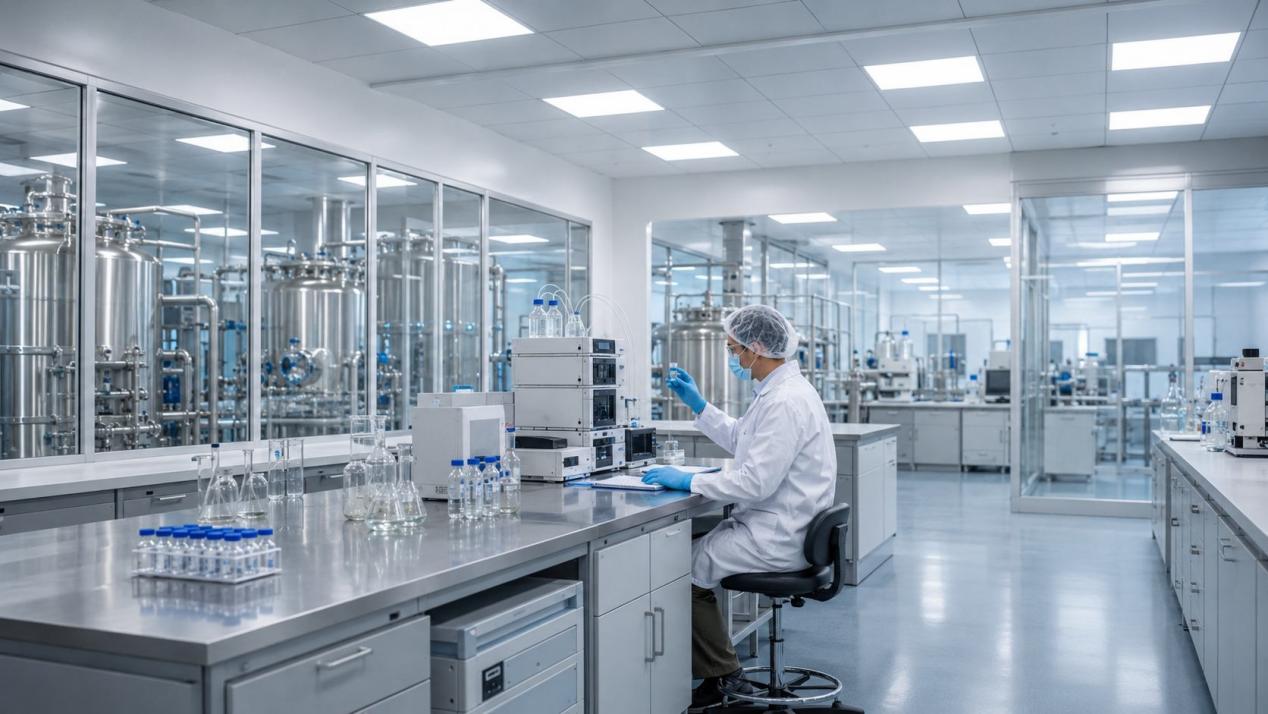
Img.Pharmaceutical laboratory for cleaning validation.webp
What TOC and HPLC Measure
The first step is deciding what evidence the cleaning program needs. A total organic result can support broad routine monitoring, while a compound-specific result may be required for selected residues.
TOC Measures the Total Organic Signal
A total organic carbon analyzer measures carbon from oxidizable organic material in a water sample. The result may include carbon from an API, excipient, detergent, degradation product, or another organic source. It does not identify each compound by name.
That broad response can suit shared pharmaceutical equipment when a validated total organic result supports the acceptance strategy.
Method quality still depends on sampling and recovery. The residue needs to enter the rinse sample or validated aqueous extract, and the oxidation method needs to produce a reliable response. Blank control, holding time, dilution, and the relationship between carbon content and the residue limit also need documentation. FDA recognizes TOC for direct surface and rinse-water samples when the method is scientifically justified, recovery is demonstrated, and background carbon is controlled.
HPLC Measures a Selected Compound
HPLC separates and quantifies a target compound. It is generally the stronger choice when the report must identify a specific API, cleaning agent, impurity, or degradant.
That specificity brings reference standards, columns, mobile phases, extraction procedures, system-suitability tests, and controlled documentation.
TOC vs HPLC for Cleaning Validation
The comparison below helps procurement, QC, and validation teams screen the two approaches. Final selection still depends on representative samples and the approved cleaning strategy.
|
Purchasing Factor |
TOC Analysis |
HPLC Analysis |
|
Reported result |
Total organic carbon |
Specific compound concentration |
|
Specificity |
Non-specific |
Compound-specific |
|
Method development |
May cover a broader residue group |
Usually residue-specific |
|
Routine throughput |
Well suited to repeated aqueous testing |
Depends on preparation and run time |
|
Common consumables |
Standards, sample vials, tubing, and model-specific service parts |
Solvents, columns, standards, filters |
|
Best fit |
Routine total organic residue monitoring |
Targeted identification and quantitation |
Sampling can change the decision. Rinse sampling covers large or difficult-to-access product-contact paths, while swab sampling provides direct evidence from a defined surface. Either approach requires suitable recovery and a clear link to the analytical limit.
Rinse samples alone may not be sufficient for cleaning validation when direct surface sampling is technically feasible. A rinse solvent may fail to dissolve or remove all residues, particularly poorly soluble material. The sampling strategy therefore needs to consider residue solubility, equipment accessibility, demonstrated recovery, and the ability of the rinse method to represent the relevant product-contact surfaces. Using both rinse and swab samples can provide stronger evidence where each method addresses different equipment locations. FDA states that rinse-only sampling is generally not acceptable when direct residue measurement is feasible.
MedIntegrity's guide to cleaning validation rinse TOC covers sample points, blanks, acceptance limits, and release records in more detail.
When a TOC Analyzer Is a Practical Choice
A TOC analyzer becomes commercially attractive when the laboratory needs repeatable total organic measurement and the sample fits an aqueous workflow.
Shared Equipment and Repeated Sample Loads
TOC testing can work well for multi-product equipment when target residues contain measurable organic carbon and the site does not need to identify each compound in every routine result.
A broader validated method can reduce residue-specific standards, columns, procedures, and analyst training across the product portfolio. The method still needs defined rules for recovery, blank control, carbon conversion, dilution, holding time, and result investigation.
Low-Level Aqueous Samples
Low-level rinse samples are a natural fit for TOC testing when the residue is soluble or can be transferred into a validated aqueous extract. Swab samples can also enter the workflow after controlled extraction.
For purchasing teams, the practical value comes from the complete workflow. Sample preparation, analysis, electronic records, result review, and approval all influence how quickly equipment can return to production.
When HPLC Is the Better Fit
HPLC remains important when a non-specific carbon result cannot answer the quality question.
Compound-Specific Results Are Required
HPLC is the clearer choice when a named compound must be reported separately. It can distinguish a target residue from unrelated organic background and support different limits for an API, cleaning agent, and degradant.
A Combined Strategy Can Be Practical
Some pharmaceutical sites use HPLC for compound-specific validation work and TOC for qualified routine monitoring of suitable aqueous samples. This keeps targeted analytical capability where it is needed while creating a simpler routine path for appropriate residues.
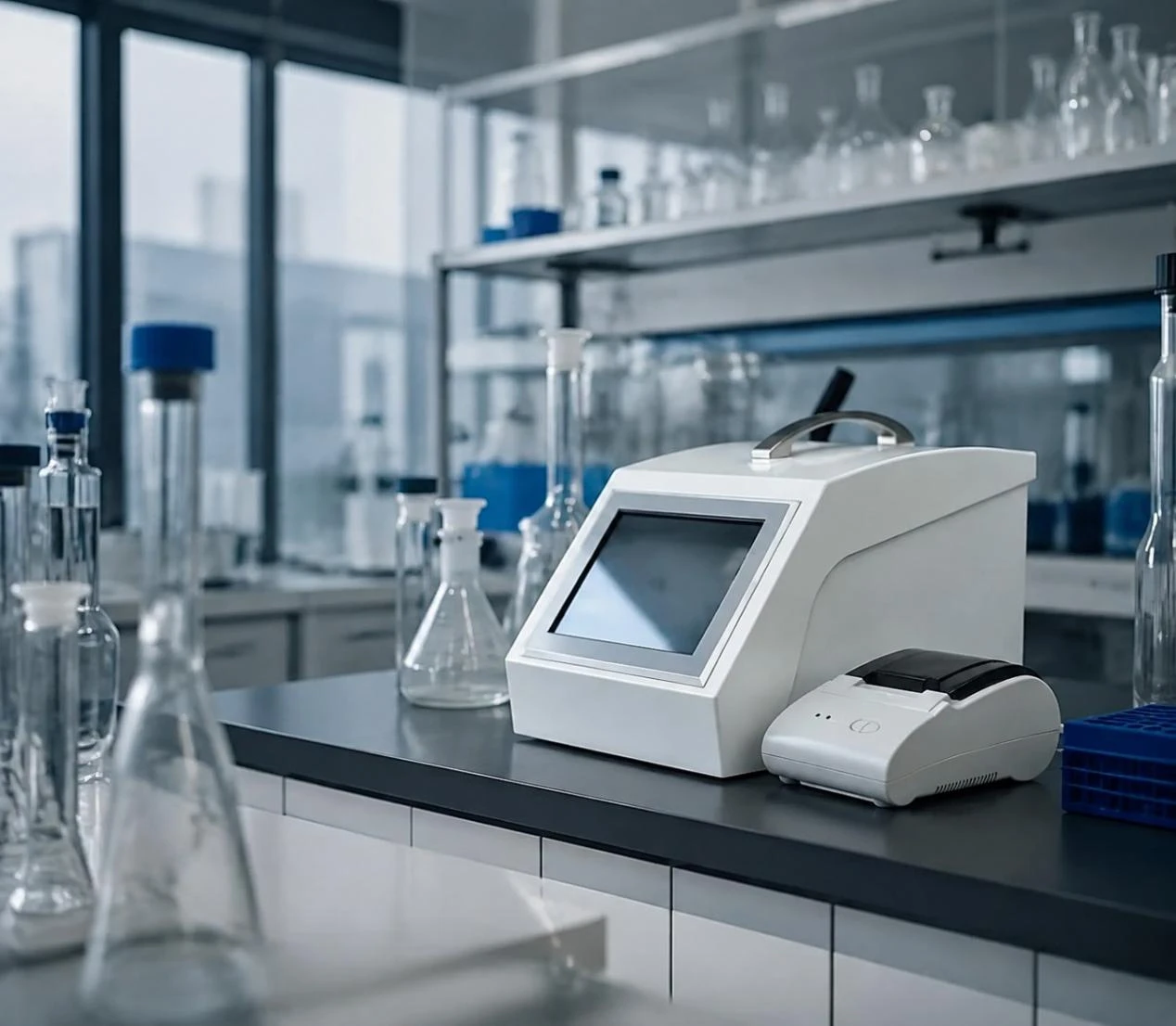
Img.medintegrity TOC analyzer in pharmaceutical laboratory.webp
Where the NEURONBC TA-2.0 Fits
MedIntegrity offers total organic carbon analyzers for pharmaceutical water and laboratory testing. The TA-2.0 combines low-level aqueous analysis with controlled records and a straightforward operating workflow.
Measurement Performance for Low-Level Water Samples
The NEURONBC TA-2.0 TOC Analyzer measures total carbon, inorganic carbon, and total organic carbon in water using UV oxidation and direct conductivity.
Its published measuring range is 0.001 to 1.5 mg/L, equivalent to 1 to 1500 ppb. The listed response time is below four minutes. Published specifications also include accuracy of ±3%, reproducibility of 3% or less, a sample-temperature range of 1°C to 95°C, and a stated resolution and detection limit of 0.001 mg/L.
These specifications give QC teams a clear basis for evaluating low-level rinse and pharmaceutical water samples. Buyers can compare expected concentration, blank level, sample volume, and acceptance limits with the published operating range.
Representative samples can help the site and supplier evaluate the expected measuring range, blank contribution, possible dilution needs, container selection, and sample-handling considerations before the final configuration is selected.
Electronic Records and Controlled Access
The TA-2.0 product information lists electronic testing records, four user-control levels, and retention of historical records and audit-trail data for more than three years.
For a GMP laboratory, these functions support controlled operation, result review, and traceability. Site procedures can then cover user administration, method protection, backup, review, and system validation.
Direct Manufacturer Support
MedIntegrity identifies itself as a manufacturer with its own production base. Its technical service and training cover instrument operation, maintenance, calibration knowledge, telephone support, warranty service, factory repair, and eligible customization.
Direct manufacturer communication gives B2B buyers a practical route to discuss sample requirements, data functions, documentation expectations, training, delivery, and after-sales service before the order is finalized.
Comparing TA-2.0 with Established TOC Platforms
Global platforms such as the Sievers M9 Laboratory and Shimadzu TOC-L are common reference points in TOC analyzer procurement. A useful comparison focuses on application fit, workflow, documentation, service, and ownership cost.
A Focused Comparison for Pharmaceutical Buyers
The Sievers M9 Laboratory is often evaluated where automated operation, autosampling, and high routine throughput are central to the project. Its official specifications include a two-minute analysis cycle, automated calibration and verification, and compatibility with autosampling.
Shimadzu TOC-L is commonly evaluated where 680°C catalytic combustion oxidation and broad matrix handling are important. The published TOC-L range extends from 4 µg/L to 30,000 mg/L, depending on the model and configuration.
The MedIntegrity TA-2.0 combines low-level aqueous TOC measurement, a sub-four-minute published response, electronic records, four-level user control, and direct manufacturer support. This gives pharmaceutical QC teams a focused option for rinse TOC testing and pharmaceutical water analysis.
Each platform brings a different configuration strategy. Buyers can compare the sample workflow, automation requirements, software, qualification package, training, service availability, and final commercial scope.
Configured quotations matter. A headline TOC analyzer price rarely shows the complete documentation, training, calibration, delivery, warranty, and service package. Side-by-side comparison gives buyers a clearer commercial picture than model names alone.
What Buyers Need Before Requesting a Quote
A useful RFQ starts with the sample and method. "TOC analyzer, best price" leaves too many variables open and produces quotations that are difficult to compare.
Sample and Method Information
Provide:
Target residue and cleaning agent
Rinse sample or aqueous swab extract
Expected TOC concentration and acceptance limit
Solubility, clarity, and background carbon
Recovery and oxidation information
Daily sample count and holding time
Current TOC or HPLC method
Representative samples can help confirm range, blank contribution, dilution, repeatability, and handling.
The expected blank value deserves early attention. Carbon from rinse water, containers, extraction materials, or handling can affect the available measurement margin, particularly when the approved limit is low.
Configuration and Documentation Requirements
Also define:
Autosampling needs
User-access levels
Audit-trail expectations
Data export
Qualification documents
Installation and training
Calibration support
Warranty and service
Delivery schedule
These details make the TOC analyzer price comparable across suppliers. One quotation may include training and qualification support, while another may cover only the base instrument.
Comparing Total Cost of Ownership
Purchase price is only one part of the investment. A five-year comparison can include the analyzer, software, qualification documents, standards, consumables, calibration, maintenance, service, and analyst time.
HPLC adds solvents, columns, reference standards, filters, waste handling, system-suitability work, and product-specific method maintenance.
TOC includes method work such as recovery studies, blank control, oxidation suitability, dilution rules, holding-time studies, and carbon calculations. This work creates the scientific basis for reliable routine testing.
The best commercial decision matches the instrument to the sample and workload. It includes the functions the laboratory needs, a clear service path, and enough capacity for routine demand.
Conclusion
TOC and HPLC serve different roles in pharmaceutical cleaning validation. HPLC remains valuable when compound identity and selective quantitation are required. A validated TOC analyzer can support efficient routine testing when the target contains recoverable, oxidizable carbon and a total organic result fits the acceptance strategy.
The MedIntegrity TA-2.0 offers low-level aqueous TOC measurement, a published 1 to 1500 ppb range, a response time below four minutes, electronic records, controlled user access, and direct manufacturer support. Pharmaceutical manufacturers and CDMOs can contact MedIntegrity for a method-fit review and quotation by providing the target residue, sampling method, expected TOC range, acceptance limit, daily throughput, data requirements, and qualification scope.
FAQs
Q1: Can a TOC analyzer replace HPLC for every cleaning validation method?
A: No. HPLC remains appropriate when a specific API, cleaning agent, impurity, or degradant must be identified and quantified.
Q2: Which residues are suitable for TOC cleaning validation?
A: Suitable residues contain measurable organic carbon and can be recovered, transferred into an aqueous sample, and oxidized reliably under the selected method.
Q3: Can the MedIntegrity TA-2.0 test swab samples?
A: The TA-2.0 measures water samples. A swab workflow uses a validated aqueous extraction, after which the resulting sample is evaluated against the analyzer range and method conditions.
Q4: What information is required for an accurate TOC analyzer price?
A: Suppliers need the sample type, expected concentration, daily volume, autosampling needs, data controls, qualification documents, training, warranty, and service scope.
Q5: How does the TA-2.0 compare with combustion TOC analyzers?
A: The TA-2.0 uses UV oxidation and direct conductivity for low-level aqueous testing. Combustion analyzers use a different oxidation and detection approach. Buyers can compare the methods against sample type, concentration range, workflow, documentation, and service requirements.