


TOC Analyzer Price & Autosampler ROI Guide for Pharma QC
A faster TOC analyzer will not solve a QC bottleneck if the instrument still spends part of the day waiting for someone to load the next batch. In a busy pharmaceutical laboratory, that can turn an equipment purchase into a capacity problem rather than a throughput solution.
Buy too little automation and sample queues remain. Buy too much and expensive capacity sits unused.
That is why laboratory automation needs to start with workload, not tray size. For teams reviewing high-throughput TOC analysis, NEURONBC's TOC analyzer portfolio brings analytical instruments and autosampling options into the same purchasing discussion. The goal is a configuration that matches real sample volume, analytical range, staffing, and budget.
Why TOC Automation Becomes a Procurement Issue in High-Throughput Pharma QC
As routine sample volume rises, TOC testing starts to affect analyst availability, turnaround time, and equipment utilization-not only analytical performance. Before comparing models or requesting quotations, the lab needs to know whether manual sample handling is limiting sample throughput. That helps procurement avoid paying for automation the team rarely uses or selecting a system that may struggle as workload grows.
When Manual Sample Handling Becomes the Bottleneck
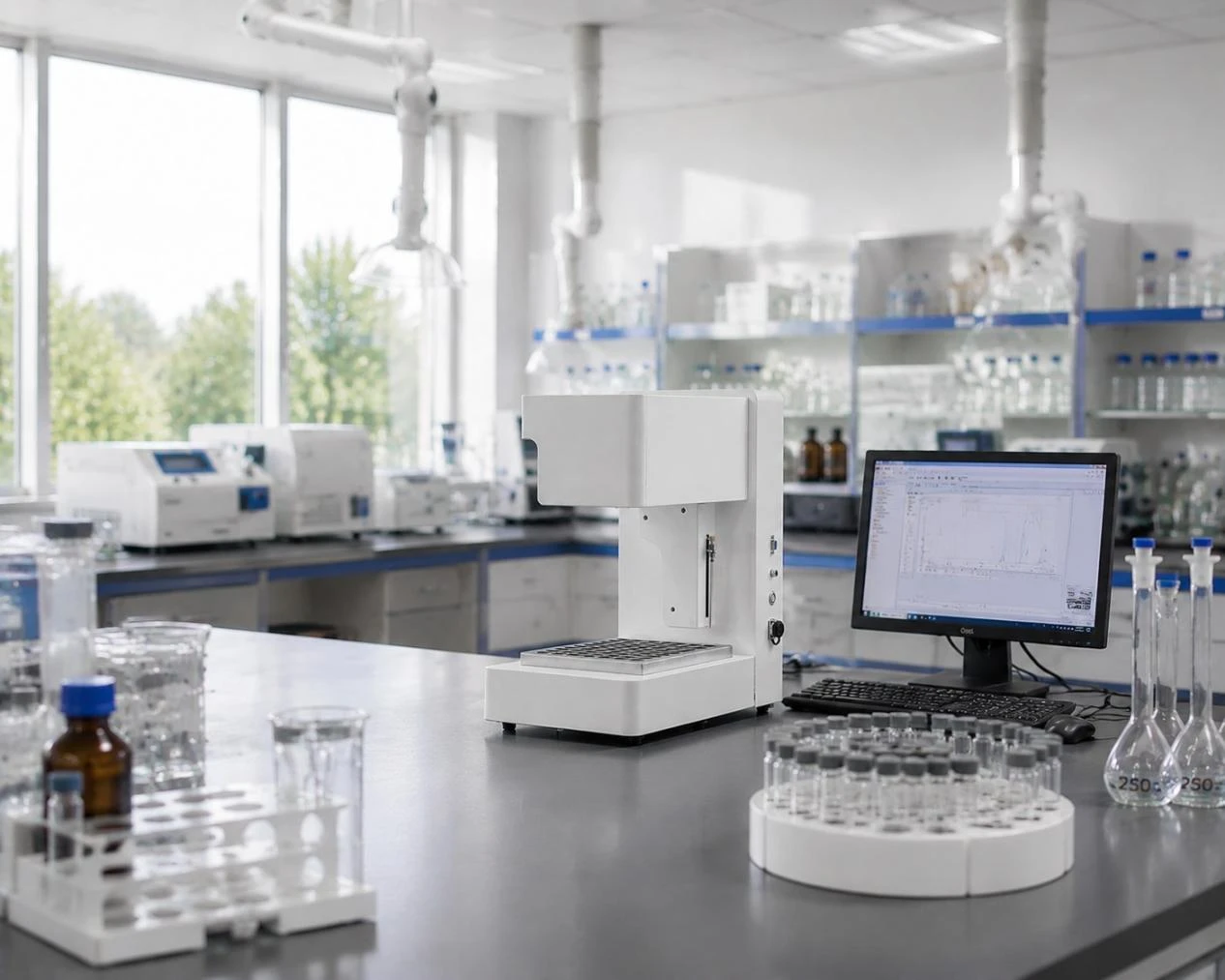
There is no fixed sample count that automatically justifies a TOC autosampler. Batch size, analysis time, repeat tests, shift structure, labor cost, and usable unattended testing time all change the break-even point.
Track a normal working week:
Daily sample count and peak batch size
Hands-on loading and run-management time
Instrument idle time between batches
Repeat-test frequency
Overtime or delayed QC work
Expected workload growth
If manual loading takes only a few minutes a day, automation may have a weak payback. Several analyst hours per week is a different business case.
Which Specifications Affect Useful Throughput?
Autosampler capacity is only one part of usable throughput. Vial requirements, analysis cycle time, sequencing, rinsing, carryover control, and unattended run time all affect how much operator work automation removes.
For procurement, the better question is not "How many positions does it have?" It is "How much of that capacity will we actually use?" A larger tray only creates value when normal batches and operating hours can make productive use of it.
Evaluating TA-200 and AIS-7200 for Automated TOC Analysis
Once workload is clear, model-level evaluation becomes easier. Measurement range, detection limit, sample type, utilities, and sample-handling workflow can be checked against a real user requirement instead of a long feature list. These parameters affect application coverage, site preparation, operating cost, and whether automation really reduces routine workload.

TA-200 Range, Detection Limit, and Sample Matrix Fit
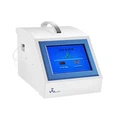
The NEURONBC TA-200 Total Organic Carbon Analyzer uses high-temperature combustion with NDIR detection and supports TC, TIC, TOC, and NPOC methods. Its standard measurement range is 0–3000 ppm, with a 5 ppb detection limit and 3% repeatability. It supports liquid, gas, and solid samples.
For laboratories working with different sample types, that gives procurement more flexibility when assessing whether one total organic carbon analyzer can cover the required analytical scope. The actual samples and target range still determine the final configuration.
TA-200 also requires oxygen and nitrogen at ≥99.99% purity. Gas supply, regulators, site preparation, and ongoing consumption therefore belong in the ownership-cost calculation from the beginning.
AIS-7200 Workflow Questions Before Quotation
The NEURONBC AIS-7200 Autosampler is part of MedIntegrity's TOC automation range and is used with MedIntegrity TOC analyzers for multi-sample processing and automatic positioning.
Before quotation, confirm sample capacity, vial requirements, sequencing, cleaning or rinsing needs, routine maintenance, and integration with the selected analyzer. These details determine what a normal automated batch will look like in practice.
A TOC autosampler creates value when it reduces operator intervention in the lab's real workflow. If routine sample queues already consume analyst time, automated sample handling becomes easier to justify.
Once those requirements are defined, competing systems can be judged against the same workload rather than compared brochure by brochure.
Comparing TA-200 + AIS-7200 With Other Automated TOC Systems
Global TOC suppliers often build their platforms around different priorities, such as very low-level analysis, larger autosampler capacity, or broader automation packages. Those features have value only when they match the application. For a B2B buyer, analytical scope, usable sample throughput, utilities, service requirements, and total cost are more useful comparison points than the largest number in a specification table.
Where NEURONBC Can Offer a Better-Matched Configuration
TA-200 combines high-temperature combustion/NDIR analysis with a 0–3000 ppm standard range and support for liquid, gas, and solid samples. AIS-7200 adds an automation route for multi-sample work.
That combination is worth evaluating when a laboratory needs broader sample flexibility and wants automation based on its actual batch workflow. Some established systems may be better suited to highly specialized low-level work or unusually large fixed batches. MedIntegrity does not need to outperform every global brand on every specification to make a strong shortlist.
Its practical advantage is that TA-200 and AIS-7200 can be evaluated around the buyer's analytical range, workload, utility requirements, support needs, and project budget.
Technical fit narrows the shortlist. Commercial fit determines whether the configuration is worth buying.
TOC Analyzer Price, ROI, and Total Cost of Ownership
The base TOC analyzer price is only one number in an automation project. Utilities, consumables, analyst time, training, qualification-related work, freight, maintenance, and repair arrangements can change the economics over several years. A useful ROI calculation starts with the laboratory's operating model rather than the initial quotation alone.
What Belongs in the ROI Calculation?
A simple framework is often enough:
Annual automation value analyst time released + additional usable testing capacity − added annual automation cost
Actual workload is more useful than a generic ROI percentage. If automation saves ten minutes on an occasional batch, payback may be poor. If an automated TOC analyzer releases several analyst hours each week and keeps testing moving during previously idle periods, the commercial case becomes much stronger.
Future workload matters too. The selected configuration needs enough headroom for expected sample throughput without paying for excessive spare capacity.
Utilities, Consumables, and Service Costs That Affect ROI
For TA-200, high-purity oxygen and nitrogen belong in the lifecycle calculation from day one. Depending on the site, gas supply may involve cylinders or existing infrastructure, regulators, and recurring operating expense.
A meaningful TOC analyzer price comparison can include the analyzer, TOC autosampler, utilities, consumables, training, any required qualification-related documentation, freight, maintenance, warranty, and repair arrangements.
A low equipment quotation can become a more expensive project once those costs are added. Equally, a sensibly configured system can avoid paying for features that never produce useful capacity.
Implementation, Maintenance, and Overseas Technical Support
A technically suitable system still has to become a working QC asset. For an international equipment project, training, maintenance responsibilities, qualification activities, repair logistics, and supplier communication all affect implementation. These points are easier to settle before the purchase order than after the equipment arrives.
Operator Training, Maintenance, and Repair Support
NEURONBC's technical training and after-sales support covers instrument performance, structure and operation, components, maintenance, instrument testing, and general calibration knowledge. Technical support is available by phone, and equipment can be returned to the factory for repair when an issue cannot be resolved remotely. Customization can also be discussed against customer requirements within applicable regulatory requirements.
For an overseas buyer, confirm who handles first-line troubleshooting, what training is included, how warranty cases are managed, what routine maintenance is required, and what happens when remote support does not close the issue.
Planning Lead Time, Qualification, and Go-Live
There is no single implementation time that fits every TA-200 + AIS-7200 project. Equipment availability, destination, import procedures, site utilities, training, and the customer's qualification process can all affect the schedule.
A more useful plan separates four milestones:
equipment availability → delivery → training and qualification → routine QC use
For projects tied to method transfer, validation, or a fixed production schedule, work backward from the required go-live date rather than treating delivery as project completion.
Conclusion
High-throughput TOC automation makes commercial sense when it removes a measurable workload constraint. Sample volume, analyst time, analytical range, sample matrix, automation workflow, utilities, maintenance, and support all influence that decision.
MedIntegrity TA-200 provides high-temperature combustion/NDIR TOC analysis across a 0–3000 ppm standard range and supports liquid, gas, and solid samples. AIS-7200 adds multi-sample automation within the MedIntegrity TOC product range.
A finished URS is not required to start a discussion. If a team is still comparing TOC analyzer suppliers, sample type and approximate daily workload are enough for an initial review. More developed projects can add the expected TOC range, batch size, available utilities, destination market, and target go-live date. Use the NEURONBC technical inquiry page to request a technical configuration review and project quotation.
FAQ
Q1: When does a pharmaceutical QC lab need a TOC autosampler?
A: A TOC autosampler becomes more useful when manual loading repeatedly takes analyst time, creates sample queues, or limits unattended testing. The break-even point depends on actual batch size and workload rather than a fixed samples-per-day number.
Q2: Which specifications matter most when selecting an automated TOC analyzer?
A: Sample matrix, TOC range, detection limit, batch size, analysis time, autosampler workflow, vial requirements, carryover control, utilities, and usable unattended operating time are the main factors to compare.
Q3: What costs belong in a TOC analyzer price comparison?
A: A complete TOC analyzer price review can include the analyzer, autosampler, gases or other utilities, consumables, training, qualification-related documentation, freight, maintenance, warranty, and repair arrangements.
Q4: What maintenance and operator training does an automated TOC system require?
A: The exact routine depends on the selected configuration. Operator training, routine care, testing, calibration knowledge, troubleshooting, and repair planning all affect uptime. MedIntegrity's service scope includes training, maintenance guidance, phone technical support, and factory repair when remote troubleshooting is not sufficient.
Q5: What information does a TOC analyzer supplier need for an initial quotation?
A: Sample type and approximate daily workload are enough to begin. Expected TOC range, peak batch size, available utilities, documentation needs, destination market, and target go-live date can be added as the project becomes more defined.