




Freezing Point Osmometer Guide for High-Concentration Labs
A freezing point osmometer can cover the expected range and still be the wrong choice for a high-concentration mAb formulation. In a pharmaceutical lab, that mismatch can mean repeat testing, wasted high-value samples, extra method troubleshooting, or delays before routine QC.
That risk matters in 2026 as high-concentration biologics remain a major formulation focus. As protein concentration rises, viscosity, excipient composition, and non-ideal osmolality behavior can make result interpretation and method selection more complex. The buying question is no longer simply, "Which osmometer has the widest range?" It is whether the instrument fits the actual sample, required repeatability, data-control needs, testing workload, and project budget.
For teams building a technical shortlist, NEURONBC's Freezing Point Osmometer range provides a pharmaceutical-focused option that can be evaluated against those same application, workflow, and purchasing requirements.
Why High-Concentration mAbs Require Application-Specific Osmometer Selection
For formulation and QC teams, the sample is the best place to start. Two instruments can look similar on a quotation yet differ in repeatability, sample handling, data controls, and performance with high-viscosity samples. A specification sheet can narrow the shortlist, but it cannot show how an unusual protein formulation will behave in routine testing.

Img.pharmaceutical osmolality testing laboratory.webp
Sample Compatibility Comes Before Maximum Range
High-concentration mAb formulations can contain protein, buffers, sugars, salts, surfactants, and other excipients that change viscosity and solution behavior during testing.
A buyer needs more than a nominal range match. Protein concentration, viscosity, excipient system, target repeatability, and sample availability all matter.
Sample volume is especially important when development material is limited or expensive. Confirm the model-specific sample requirement during technical evaluation rather than treating it as a secondary specification. For high-viscosity samples or unusual formulations, representative sample testing before purchase can reduce later method troubleshooting.
Which Specifications Matter in Routine Osmolality Testing?
Teams deciding how to choose a freezing point osmometer can focus on the parameters that affect the method and daily workload:
Measurement range, error, repeatability, and linearity
Test cycle time and sample requirements
Matrix compatibility
Calibration and routine verification
User access, electronic records, and audit trail
Training, maintenance, and technical support
Not every advanced feature earns its cost. A formulation lab may not need high-throughput automation, while QC may place more weight on traceable records and controlled user access.
Evaluating FPOSM-V3.0 for Pharmaceutical Osmolality Testing
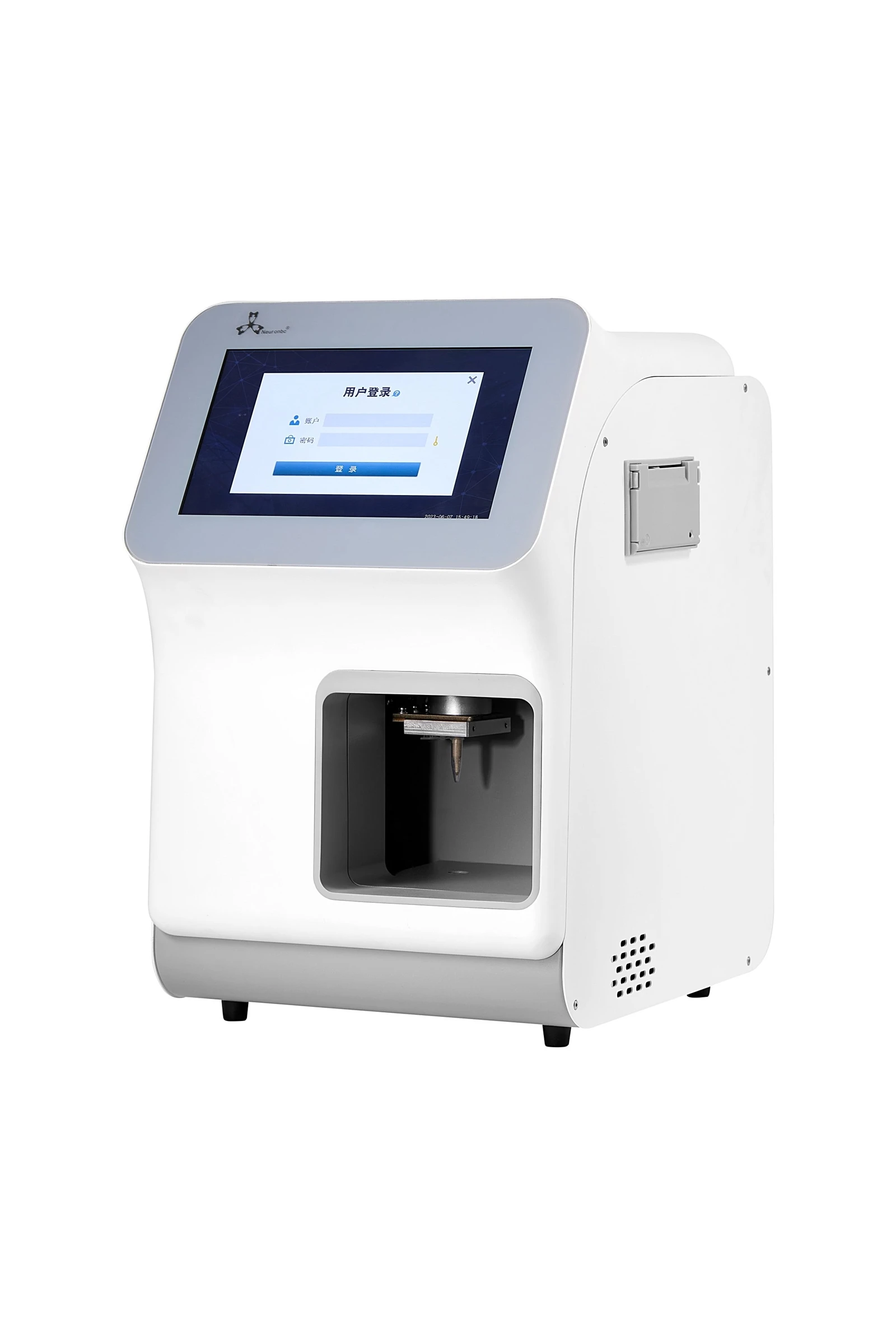
Once the application requirements are clear, model-level evaluation becomes easier. MedIntegrity FPOSM-V3.0 combines freezing-point measurement with data-management functions relevant to pharmaceutical analytical workflows. The key question is how the specifications affect capacity, consistency, and record control.
Measurement Performance in Routine Pharmaceutical Workflows
The NEURONBC FPOSM-V3.0 Freezing Point Osmometer has a stated range of 0–3000 mOsmol, testing duration of ≤3 minutes, measurement error of ≤1%, repeatability of ≤1%, and linearity of ≤1%.
These figures give QC and formulation teams a practical baseline. The ≤3-minute test duration, for example, can be used to estimate daily capacity against the lab's real sample load instead of being treated as a generic "fast testing" claim.
MedIntegrity does not currently publish a validated concentration or viscosity limit specifically for high-concentration mAb formulations. Difficult protein matrices therefore need application review before routine use.
Data Traceability for Pharmaceutical QC
FPOSM-V3.0 includes electronic signature functionality, user classification management, a Linux-based operating system, and an audit trail with a stated capacity of 300,000 sets.
For pharmaceutical QC, the value is controlled access and traceable activity. Organized user actions and test records make reviews and investigations easier to manage.
Those functions still need to fit the site's SOPs, validation approach, data-retention policy, and internal quality requirements. Once those requirements are clear, competitor platforms become easier to compare.
How FPOSM-V3.0 Compares With Established Freezing Point Osmometers
A useful B2B comparison does not need a universal winner. One laboratory may prioritize highly viscous protein samples; another may focus on range, user control, service, or acquisition cost. Those differences matter only when they are tied back to the actual method.
Measurement Range, Sample Handling, and Workflow Differences
|
Platform |
Measurement Range |
Sample / Workflow Point |
Practical Buyer Consideration |
|
NEURONBC FPOSM-V3.0 |
0–3000 mOsmol |
≤3 min; e-signature; user classification; 300,000-set audit trail |
Relevant where range and traceable data functions are priorities |
|
Advanced Instruments OsmoTECH XT |
0–4000 mOsm/kg H₂O |
20 µL; complex and highly viscous samples |
Strong fit when difficult-matrix capability is important |
|
KNAUER K-7400S |
0–2000 mOsmol/kg |
50 or 150 µL; ~2 min |
Semi-micro option for aqueous-sample workflows |
Osmometer uses 20 µL and covers 0–4000 mOsm/kg H₂O, with specific capability for complex and highly viscous samples. KNAUER K-7400S covers 0–2000 mOsmol/kg, uses 50 or 150 µL, and has an approximate two-minute test time.
The manufacturers do not express every range in identical units, so maximum values are not perfectly interchangeable. Range alone is also a weak way to rank these platforms.
When FPOSM-V3.0 Is a Practical Fit
A laboratory working routinely with highly viscous protein matrices may value OsmoTECH XT's documented difficult-sample capability.
FPOSM-V3.0 becomes relevant when a pharmaceutical buyer wants a pharmaceutical osmometer with a stated 0–3000 mOsmol range plus electronic signatures, user classification, and extensive audit-trail storage.
The better choice depends on the sample and quality system. Paying for unused capabilities adds cost; missing a function that later becomes important to routine QC can cost more.
Osmometer Price and Total Cost of Ownership
After the technical shortlist is built, procurement can compare commercial packages more fairly. Osmometer price matters, but the quotation is only part of the project cost. Calibration materials, training, freight, documentation, maintenance, and repair logistics can change the real cost over several years.
What Belongs in the Total Cost of Ownership?
A useful quotation comparison covers:
Calibration or reference materials
Routine consumables
Training and commissioning
Qualification-related documentation
International freight and import costs
Warranty, repair logistics, and downtime
A lower initial price can lose its advantage if overseas repair creates long downtime or repeated shipping costs.
NEURONBC's pharmaceutical testing equipment portfolio gives procurement teams a broader supplier context when several pharmaceutical testing instruments are under review. Each model still needs its own technical assessment.
Training, Maintenance, and Overseas Technical Support
The buying decision continues after the PO. Operators need training, calibration has to fit the lab routine, and technical support needs a workable route when a problem appears. In an overseas project, repair handling and response time can have a direct effect on uptime.
NEURONBC Training and After-Sales Support
MedIntegrity's technical training and after-sales support covers instrument performance, structure and operation, components, maintenance, instrument testing, and general calibration knowledge. Phone support is available, with return-to-factory repair when an issue cannot be resolved remotely. Customization can also be discussed within applicable regulatory requirements.
For an overseas buyer, the practical questions are simple: What training is available? What does the warranty cover? How are spare parts handled? What is the repair route? Which qualification documents are included?
How Long Will Implementation Take?
Implementation time varies by project. Equipment availability, destination, freight and import procedures, site readiness, training, and the buyer's qualification process all affect the schedule.
Delivery and go-live are not the same date. When timing matters, ask the osmometer supplier to separate product lead time, shipping, training, commissioning, and qualification activities. That gives procurement and QC a realistic path to a method-transfer, validation, or routine-testing deadline.
Conclusion
Choosing a freezing point osmometer for high-concentration mAb osmolality testing starts with application fit. Range matters, but sample behavior, repeatability, test time, data traceability, calibration, total cost of ownership, and technical support shape the final decision.
MedIntegrity FPOSM-V3.0 offers a stated 0–3000 mOsmol range, ≤3-minute testing duration, electronic signature functionality, user classification, and a 300,000-set audit trail. For unusually concentrated or viscous formulations, the actual sample needs to be part of the technical discussion before purchase.
For teams still comparing pharmaceutical osmometer options, a full purchase specification is not required to start the discussion. MedIntegrity can review the sample type, expected osmolality range, estimated testing volume, documentation needs, destination market, and project timeline to help determine whether the FPOSM-V3.0 is a practical fit. Preliminary application requirements can also be reviewed before equipment selection is finalized.
Contact NEURONBC to request an application review, technical recommendation, and project quotation.
FAQ
Q1: Is freezing point osmometry suitable for high-concentration mAb formulations?
A: It can be, but protein concentration, viscosity, excipients, and the full sample matrix influence application fit. Maximum range alone is not enough to qualify an instrument.
Q2: Which specifications matter most when choosing a pharmaceutical osmometer?
A: Sample compatibility, range, error, repeatability, test time, calibration, and workload come first. User access, audit trail, training, and service also matter in controlled pharmaceutical workflows.
Q3: How much does a pharmaceutical freezing point osmometer cost?
A: Osmometer price depends on configuration, documentation, training, shipping, and service scope. Total project and lifecycle cost give procurement a clearer comparison than the base price alone.
Q4: What maintenance and training matter when choosing an osmometer supplier?
A: Confirm operator training, routine maintenance guidance, calibration support, warranty coverage, troubleshooting, repair logistics, and spare-parts availability.
Q5: Is sample testing worthwhile before buying an osmometer for high-concentration mAbs?
A: Yes, particularly for high-viscosity samples or formulations with complex excipient systems. Representative sample testing gives better evidence of application fit than nominal range alone.