



Beyond Calibration: The Hidden Downtime Cost of Legacy Integrity Testers
In pharmaceutical manufacturing, a filter integrity tester is often judged by accuracy, compliance functions, and purchase price. Those points matter, but they do not show the full cost of ownership.
The larger cost often appears later: downtime.
A legacy integrity tester may still complete routine tests. It may already be written into site procedures and familiar to operators. Yet when calibration takes longer than planned, a repair case waits for support, or a small spare part is unavailable, the tester can become a production bottleneck. For sterile-grade filtration, this is not a minor delay. Integrity testing is tied to filter performance verification, GMP documentation, and batch release.
That is why pharmaceutical equipment buyers are looking beyond basic test capability. The better question is whether the instrument can support routine production without adding hidden maintenance cost.

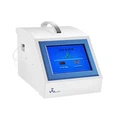
NeuronBC v8.0 filter integrity tester in pharmaceutical manufacturing facility.
Why Downtime Matters in Sterile Filtration
Integrity Testing Affects Batch Release
Sterile filtration workflows depend on reliable integrity test results. If the tester is unavailable, the impact can move quickly from one workstation to several departments. Production may wait for test completion. QA may not be able to review the record. Maintenance may need to check the fault before the equipment returns to use.
A tester does not need to fail completely to slow production. An unstable reading, unclear alarm, repeated setup step, or missing accessory may be enough to delay testing. In regulated pharmaceutical manufacturing, these small interruptions can add extra documentation, internal review, and schedule pressure.
For high-value batches, downtime is not just a repair issue. It can affect release timing and confidence in the testing workflow.
Calibration Is Only One Part of the Cost
Calibration is a normal part of instrument lifecycle management. Each facility defines calibration intervals based on SOPs, risk assessment, instrument use, and manufacturer guidance. The visible cost includes calibration service and documentation. The hidden cost includes scheduling, instrument downtime, review, and release back into service.
Legacy integrity testers may also require more manual work around program setup, record handling, and troubleshooting. Over time, that extra work adds pressure to production, QA, and maintenance teams.
The Real Cost of Legacy Integrity Testers
A filter integrity tester should not be evaluated only by its purchase price. Total cost of ownership includes every event that affects routine testing.
Repair Waiting Time and Spare-Part Risk
Many global integrity tester brands have strong technical history and broad market recognition. However, spare-part access and service response can vary by region, distributor structure, and procurement process. This is a practical supply-chain issue, not a brand criticism.
When a key component, cable, port, printer, or pressure-related accessory is unavailable, the tester may stay out of use longer than expected. In pharmaceutical production, that delay can create extra work for QA, engineering, and maintenance.
Before choosing a new integrity testing system, buyers should review:
Calibration process and expected turnaround
Recommended spare parts
Regional service availability
Troubleshooting support
Record export during review
Interface needs for future automation
These factors often decide whether a tester supports production or slows it down.
Downtime Beyond the Repair Bill
The repair invoice rarely shows the full cost. A delayed integrity test may lead to repeated scheduling, extra QA review, more internal communication, and batch release pressure.
A modern filter integrity tester should reduce unnecessary manual steps, provide clear records, support controlled user access, and make routine testing easier to repeat. These features do not remove maintenance needs, but they can reduce avoidable disruption.

How NeuronBC V10 Supports Reliable Integrity Testing
NeuronBC V10 is a complete integrity tester developed for pharmaceutical filtration applications. According to NeuronBC V10 product specifications, the system is designed for regulated manufacturing environments where data control, repeatability, and uptime are important.
Multi-Method Testing for GMP Filtration
Pharmaceutical facilities may use different filter types, test conditions, and validation requirements. NeuronBC V10 supports major filter integrity testing methods used in GMP filtration workflows, including bubble point, diffusion flow, pressure hold, and water intrusion testing.
This helps facilities manage different testing needs through one platform. For production teams, fewer separate instruments can mean simpler training, easier program control, and less equipment coordination.
Program Control, User Access, and Record Traceability
NeuronBC V10 supports up to 1000 pre-stored programs and 1000 user accounts. For manufacturers running multiple products, filter sizes, or test conditions, this is a practical operating advantage.
Stored programs can reduce repeated manual entry. Controlled user accounts help separate roles and permissions. Together, these functions support more consistent test execution and better traceability.
NeuronBC V10 also includes password login, user classification, electronic signature, audit trail functions, and test record export. The system supports USB data export, including original test data, source data, configuration data, and report-style records. For QA teams, this can make review more direct and reduce dependence on scattered paper records or manual file handling.
Large-Capacity Testing and Clear Operation
NeuronBC V10 uses a 15.6-inch true-color touchscreen. A larger interface helps operators view test information clearly, select programs more easily, and follow operating steps with fewer distractions.
In routine production, usability matters. A clearer screen can reduce training friction and help operators respond faster to instrument status information.
NeuronBC V10 also supports testing for up to 12-core 20-inch filter cartridges. This is relevant for pharmaceutical facilities working with larger filtration assemblies or higher-capacity production setups. In these applications, test capacity affects scheduling, equipment planning, and production flexibility.
Flexible Interfaces for Automation Planning
NeuronBC V10 includes standard interfaces such as RS232 and USB. External interfaces can also be customized for automated control and management needs.
This gives pharmaceutical manufacturers more room for long-term planning. A facility may not connect every testing process to an automated system immediately, but flexible communication options can support future upgrades without replacing the entire testing platform.
NeuronBC V10 vs Global Benchmark Systems
Global benchmark brands in filter integrity testing are often recognized for mature platforms, long application history, and wide market presence. A practical comparison should focus less on reputation and more on production fit.
|
Buying Factor |
What Buyers Should Check |
NeuronBC V10 Relevance |
|
Test coverage |
Required methods for sterile filtration |
Supports bubble point, diffusion flow, pressure hold, and water intrusion testing |
|
Data control |
Audit trail, electronic signature, access control |
Includes user classification, audit trail, electronic signature, and exportable records |
|
Production scale |
Suitability for larger filter assemblies |
Supports up to 12-core 20-inch filter cartridges |
|
Automation planning |
Communication and external interface options |
Provides RS232, USB, and customizable external interfaces |
The right choice depends on daily testing volume, documentation workload, maintenance strategy, and future system plans. A well-known brand may help during early evaluation, but long-term value comes from stable operation, traceable records, and practical support for production needs.
Conclusion
The hidden cost of legacy integrity testers is not limited to calibration. It includes repair waiting time, spare-part uncertainty, repeated documentation, operator workload, and delayed testing. In pharmaceutical sterile filtration, these issues can affect batch release schedules and total equipment efficiency.
NeuronBC V10 gives pharmaceutical manufacturers a focused option for modern filter integrity testing. With multi-method testing, 1000 stored programs, 1000 user accounts, electronic signature, audit trail, exportable records, large-cartridge testing, and flexible interfaces, V10 is built to support reliable GMP filtration workflows with less maintenance-related disruption.
For product selection, technical discussion, or application matching, contact NeuronBC to review how V10 can fit the facility's sterile filtration testing strategy.
FAQ
Q1: What hidden costs can a legacy filter integrity tester create?
A: Downtime can delay integrity testing, hold batch review, increase maintenance work, and create extra GMP documentation pressure.
Q2: Is NeuronBC V10 suitable for sterile-grade filtration applications?
A: Yes. NeuronBC V10 is designed for pharmaceutical filter integrity testing in sterile-grade filtration and regulated manufacturing workflows.
Q3: How does NeuronBC V10 support GMP documentation?
A: It provides user classification, electronic signature, audit trail functions, and exportable test records for controlled documentation review.
Q4: Can NeuronBC V10 support larger filter cartridge testing?
A: Yes. NeuronBC V10 supports testing for up to 12-core 20-inch filter cartridges in suitable applications.
Q5: What should buyers compare before choosing a filter integrity tester?
A: Buyers should compare test methods, data control, spare-part planning, service response, production scale, and total ownership cost.