


How to Specify Water Intrusion Test Equipment for Pharmaceutical Process Filters
Before requesting a WIT equipment price, establish which filter will be tested and which specification applies to it. The water intrusion test for hydrophobic filters is tied to those details. You also need a way to fill, vent and drain the assembly under the specified water and gas conditions. Buy against that complete arrangement, with a demonstration and record requirements agreed in advance.
The practical question for procurement is what will arrive and what the plant still has to provide. Does the quote cover the tester only, or also the adapters and water-handling parts? Where does the supplier's work stop? Resolving that scope early lets engineering assess the installation and gives the buyer a sensible basis for comparing cost.
Confirm the Filter and Its Approved Water Intrusion Method
Put the filter identification at the top of the request, including the model, area and cartridge or capsule arrangement. Attach the applicable test pressure, timing requirements, units and acceptance limit. These are the reference points for reviewing the equipment. A program taken from a similar cartridge does not establish the settings for the filter being purchased.
This test is run below the pressure that forces bulk liquid water through the membrane. It is not a test that keeps raising pressure until water breaks through. Water intrusion method guidance explains the distinction, as well as other integrity methods that use a low-surface-tension wetting liquid. The approved filter method determines which measurement the equipment must perform.
NeuronBC hydrophobic PTFE cartridge filters identify water intrusion testing as an integrity-test option and have individual cartridge identification with production-batch traceability. Include that identification in the inquiry rather than requesting a generic PTFE program. The proposed test settings and result record can then be reviewed against the actual cartridge configuration and its applicable specification before the equipment is ordered.
Specify the Test Assembly as Well as the Instrument
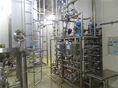
If the filter housing is already installed, start with its pipework drawing. Mark the water inlet, vent, drain, gas supply and tester connection, then compare those parts with the quoted package. A valve already on the line and an adapter still to be supplied are different purchasing items. Making that distinction on the drawing gives procurement a usable record of the outstanding work.

Img.review a pharmaceutical filter assembly beside a NeuronBC V10 filter integrity tester.webp
For WIT, water must cover the upstream membrane surface. Gas can pass through an exposed section and produce a reading that does not represent the intended water-based measurement. The filter method governs filling, orientation and removal of trapped gas. It also needs to cover drainage and preparation for service, since the end of measurement is not the end of the work on the assembly.
Review the filter and housing configurations against the space available around the installation. Connections that look clear on a schematic may be awkward to reach once the equipment is in place. Include the drain destination and the means of isolation and depressurization in this review. Protection against water reaching the tester needs an identified component or arrangement, with its supply responsibility recorded.
Define Water Gas and Temperature Requirements
Put the water source and its preparation conditions in the RFQ. The supply label may be correct, but the water can acquire residues on its route to the filter. Check the wetted path as well as the source: low-surface-tension cleaning residues can change the membrane behavior on which WIT relies.
For a test performed after sterilization, the test connections, water and gas must not compromise the required sterile boundary. Agree that arrangement with the site quality team, including downstream protection and the steps before returning the filter to service. A bench demonstration can establish part of the equipment evidence, but it does not settle these production details.
The filter can remain unchanged while temperature alters the WIT result. In WIT best-practice guidance, temperature is considered together with water quality, filling and stabilization. Carry the applicable method conditions into the equipment specification, covering the water, gas and assembly. A temperature range quoted for another cartridge is useful context, not an approved setting for this installation.
Work through the gas supply and pressure regulation from filling to the reported result. The supplier needs to explain how stability is reached and how interruptions appear in the record. That account describes the installation more usefully than a measurement-time figure on its own.
For workload planning, ask where the timing starts and stops. There is work before and after measurement: filling, equilibration, stabilization, drainage and preparation for the next assembly. Establish which steps occupy the tester. Overlapping preparation with another test is an option only if the agreed layout and procedure allow it.
Match the Tester to the Filter Configuration
Start the instrument review with the filter-specific pressure and acceptance limit. Check the measurement range, units and assignment of results to programs. Fine sensor resolution may be useful, but it cannot establish the application detection limit. That needs evidence for the filter, method and assembled test under the relevant conditions.
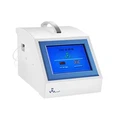
The saved programs in NeuronBC Filter Integrity Tester V10 are useful when filter configurations need separate test settings. Decide who will choose and edit those programs, then discuss access permissions with QA. Electronic signatures, audit trails and export are available for the record workflow; specify the information QA needs and how it will be provided. Data handling can then be assessed alongside the physical test connection.
Img.NeuronBC V10 filter integrity tester with an angled touchscreen.webp
If the tester is to work with plant controls, describe the handover between the two systems. Who issues the start command, who can stop the cycle, and what happens after an abort? Record the signals and responsibilities with the proposed interface. Compatibility then becomes something the supplier and controls team can verify for the actual sequence, rather than infer from a communication feature.
Agree the Demonstration and Record Requirements
Agree the acceptance basis before the demonstration. It should use the intended arrangement, or a representative one with the differences documented, and examine repeatability and suitable defect challenges. If the demonstration filter is unspecified, a passing result says little about the configuration you plan to install. The evidence has to answer the application question.
Think about a result being reviewed after the operator has moved on. It needs the filter identity and program version, settings, measured value, limit, operator and any interruptions. Approval of the program and review of changes belong in the workflow as well. Instrument access controls help with that task; they do not replace the site's procedures or qualification.

NeuronBC training and after-sales support covers instrument operation, testing, maintenance and calibration knowledge. Give that service scope a practical form in the quotation: operator instruction, calibration responsibilities, a troubleshooting contact and handover records. Application qualification and accessory supply still need explicit agreement, so both parties understand where instrument support ends and where the site's work on the assembled test begins.
Prepare a Water Intrusion Test Equipment RFQ
A useful RFQ gives the supplier enough detail to decide whether the system can run your specified method on the intended assembly. The following information lets a filter integrity tester supplier review that combination. Make mandatory requirements identifiable, and ask for a quotation that separates the base instrument, optional work and the parts left to the plant.
Exact filter model, membrane, area and cartridge or capsule arrangement
Approved WIT method, limits, units and parameter-control requirements
Assembly drawing with water, gas, vent, drain and tester connections
Available utilities, preparation conditions and expected test frequency
Record, access, export and control-interface requirements
Demonstration, qualification, accessories, training and support scope
Add up the configured package before comparing prices: tester, adapters, water-handling accessories, interface work and agreed services. A low instrument price can still leave a substantial amount of project work outside the quotation. Include quantity, destination and requested timing in the inquiry, then use the supplier's actual offer to assess the available commercial terms.
Conclusion
A water intrusion test for hydrophobic filters needs more than a capable instrument. The method has to match the identified filter, the assembly has to support the required filling and drainage, and the utilities have to permit a stable measurement. Buying against those requirements gives engineering a test arrangement to assess. It also gives procurement a quotation whose scope, demonstration and records can be compared with the project specification.
Send the filter identification, applicable WIT specification and assembly drawing for NeuronBC technical consultation. Add the utilities, record requirements, expected workload and requested support scope. That package allows the instrument configuration and surrounding test arrangement to be discussed together, instead of leaving important details until after purchase.
FAQ
Can water intrusion testing be used on a hydrophilic liquid filter?
Not as a direct replacement for the approved method on a hydrophilic liquid filter. WIT depends on hydrophobic membrane behavior under specified conditions. The filter manufacturer's method and acceptance criteria should govern the equipment choice. One test program cannot be assumed to apply across different membrane types and filtration duties.
Is WIT interchangeable with an alcohol-wetted diffusion test?
No. An alcohol-wetted diffusion test puts the membrane in a different condition and uses its own parameters and limit. There is also wetting-liquid handling and drying to consider before returning the filter to gas service. Work from the approved filter method; copying its diffusion limit into a WIT program does not make the methods equivalent.
Does a high-resolution sensor prove the application detection limit?
No. Resolution describes the instrument, while detection capability concerns the complete test on the intended assembly. The filter, method and conditions all contribute. Request demonstration and qualification evidence that shows an acceptable filter can be distinguished from the relevant defect condition. A resolution figure by itself cannot answer that question.
Is water filling and drainage equipment included with the tester?
Check the quotation. The drawing should identify the water supply, valves, vent, drain, adapters and protection against liquid reaching the instrument. Assign supply and installation responsibility for each, and state whether handling is manual or automated. Until those items are agreed, the quote cannot be treated as a complete fluid-handling package.